
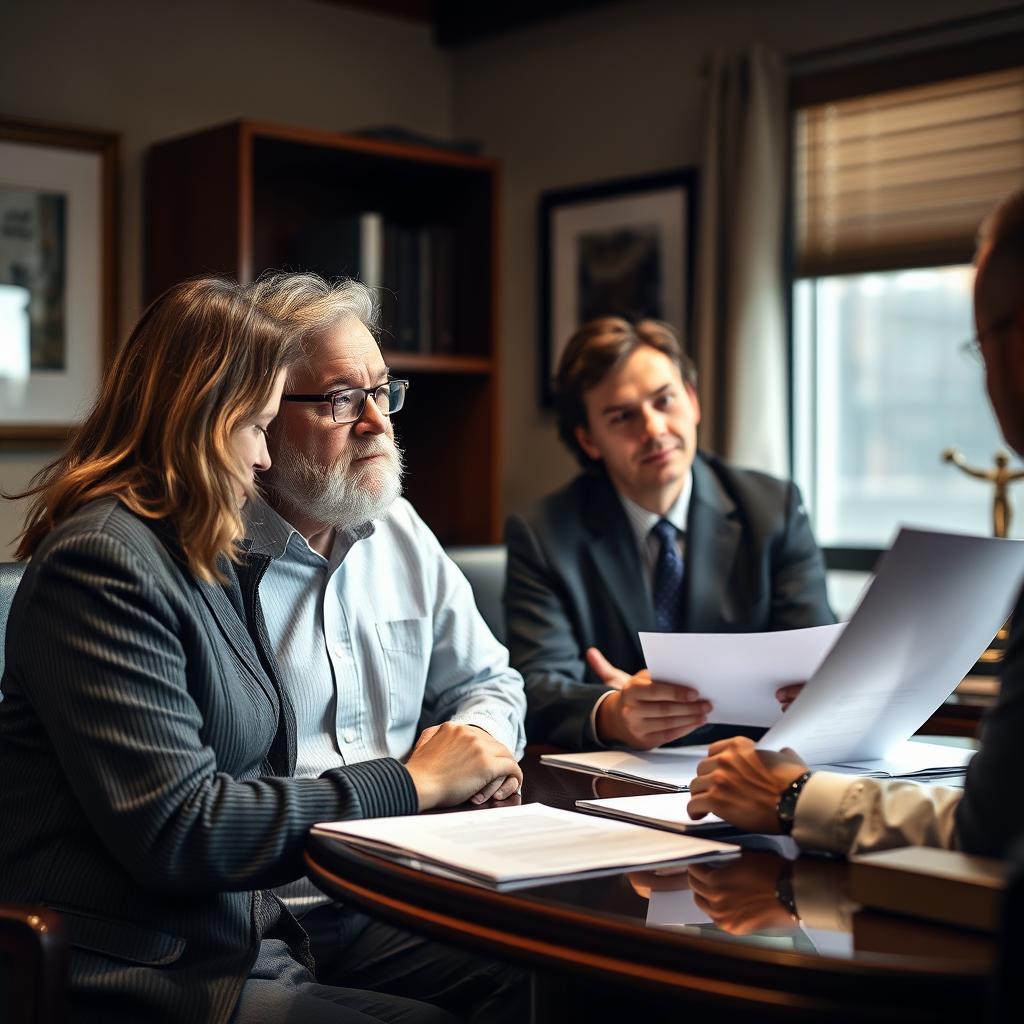
Guardianship Lawyer New York, NY
If you are seeking legal guidance concerning the appointment of a guardian for a minor child or an adult with diminished capacity in New York, NY, Law Offices Of SRIS, P.C. offers representation grounded in more than two decades of experience. Guardianship matters in New York invoke overlapping statutory frameworks—Family Court Act proceedings for children, Supreme Court proceedings under Article 81 of the Mental Hygiene Law for adults, and Surrogate’s Court matters when testamentary provisions or estate issues are involved. Each pathway carries its own procedural rules, and the absence of informed counsel can lead to unnecessary delay or an outcome that does not reflect what the family intends. Mr. Sris and his Of Counsel team bring a multi-state perspective to New York guardianship practice, appearing in courts throughout New York County (Manhattan) and the surrounding boroughs. Reach our location directly at (888) 437-7747. Law Offices Of SRIS, P.C. — Advocacy Without Borders.
What Guardianship Means in New York, NY
In New York, the term “guardianship” describes a court-ordered arrangement in which a responsible person or entity is given legal authority to make decisions for another who cannot manage those decisions independently. Two broad categories exist: adult guardianship under Article 81 of the Mental Hygiene Law, and minor guardianship under the Family Court Act and the Surrogate’s Court Procedure Act. The statutory language avoids the word “conservator,” which holds no current legal meaning in New York adult-incapacity practice; a court may appoint a guardian of the person, a guardian of the property, or both, based on a functional-capacity assessment conducted by a court evaluator. New York County (Manhattan) residents regularly appear before the Supreme Court at 60 Centre Street for adult matters, while minor petitions may be heard in the New York County Family Court or Surrogate’s Court depending on the nature of the filing. Law Offices Of SRIS, P.C. Concentrates on the procedural requirements unique to each venue, ensuring that petitions, notices, and supporting affidavits comply with the applicable practice rules.
The guardianship process is not a single-form exercise. Adult guardianship under Article 81 requires a hearing, a court evaluator’s report, and clear and convincing evidence that the alleged incapacitated person is unable to meet certain personal or property-management needs and that such inability is likely to cause harm. Minor guardianship, conversely, may proceed by petition where a child’s parents are deceased, incapacitated, or otherwise unable to care for the child, with the court evaluating the best interests of the minor. Because the standard of proof and the documentary evidence required differ markedly between adult and minor proceedings, early guidance from a lawyer familiar with both the Supreme Court and Family Court procedures is valuable. Mr. Sris and his Of Counsel approach each New York guardianship matter by first identifying the exact court pathway, then developing the factual record needed to support the petition.
How Mr. Sris and His Of Counsel Handle Guardianship Cases
Every guardianship petition begins with a thorough evaluation of the facts, the statutory requirements, and the relationships among the parties. Mr. Sris and his Of Counsel assist clients in gathering medical or psychological assessments, financial records, and other evidence that the court requires, while keeping the focus on what the proposed guardianship seeks to accomplish. In adult Article 81 proceedings, the team works with the court evaluator, opposing counsel, and any family members to clarify the scope of the guardianship—whether limited to specific assets or extending to all personal and property decisions. For minor guardianships, they prepare the petition, arrange for service on necessary parties, and present the reasons why the proposed guardian should be appointed.
The process typically unfolds over several court appearances. After the initial filing, the court schedules a hearing where the petitioner presents evidence. Mr. Sris and his Of Counsel handle oral arguments, examination of witnesses, and any settlement discussions that may avoid a contested hearing. Because New York guardianship matters can be emotionally charged, they also help clients understand the court’s timeline and the options available if circumstances change after the order is entered. In all matters, the team’s objective is a resolution that respects the autonomy of the person subject to the guardianship while addressing the protective concerns that prompted the filing.
About Mr. Sris and His Of Counsel Team
Mr. Sris, Owner and Founder of Law Offices Of SRIS, P.C., founded the firm in 1997 and practices across Virginia, Maryland, the District of Columbia, New Jersey, and New York. His Of Counsel team draws on over 120 years of combined legal experience. Results may vary. Mr. Sris and his Of Counsel have documented 4,739+ case results across all practice areas since 1997, offering clients the insight that comes from a career of courtroom advocacy. Mr. Sris’s legislative activity includes testimony before the Virginia House Courts of Justice Committee in support of 2019 HB 635 (chief patron Del. David Bulova).
All non-Owner attorneys are Of Counsel, engaged through Excella. The team includes professionals who understand the intersection of guardianship law with estate planning, family law, and cross-jurisdictional concerns. Because New York guardianship cases often involve multi-state asset management or relatives in other jurisdictions, the firm’s breadth of admission—Virginia, Maryland, D.C., New Jersey, and New York—offers a distinct structural advantage.
Frequently Asked Questions
What is the difference between an adult guardianship and a minor guardianship in New York?
Adult guardianship under Article 81 of the New York Mental Hygiene Law involves a Supreme Court proceeding to appoint a guardian for a person who cannot manage their personal or financial affairs; minor guardianship is a Family Court or Surrogate’s Court matter that appoints a guardian for a child whose parents are unavailable or unable to care for the child. The adult process requires a court evaluator’s investigation and a finding of incapacity by clear and convincing evidence, while a minor guardianship centers on the best interests of the child. Because the courts, standards, and documentation differ, a single lawyer can handle both types only by being familiar with the distinct procedural rules.
How do I start a guardianship case in New York County (Manhattan)?
You begin by filing a petition with the appropriate court—typically the Supreme Court for an adult and Family Court or Surrogate’s Court for a minor—along with supporting affidavits, medical reports, and proposed orders. New York County (Manhattan) petitioners file adult matters at 60 Centre Street and minor matters with the Family Court or Surrogate’s Court depending on the child’s circumstances. Because pleading requirements are technical, working with a guardianship lawyer can help ensure the petition is complete on the first filing, reducing the risk of a dismissal.
Does New York use the term “conservator”?
No; New York eliminated the term “conservator” in 1993 when Article 81 of the Mental Hygiene Law came into effect, replacing it with “guardian of the property” and “guardian of the person.” An adult guardianship petition under Article 81 requests that a guardian be appointed for property management or for personal needs, or both. The word “conservatorship” is not used in New York adult-incapacity proceedings, though it may appear in materials referencing other states’ laws.
How long does a guardianship case take in New York?
The timeline depends on the court’s calendar, the complexity of the case, and whether the petition is contested. An uncontested adult guardianship may proceed through the hearing phase more quickly than a contested one, but each matter is unique. The court will schedule hearings based on its own availability, and a lawyer can provide a more specific estimate after reviewing the individual circumstances and the court’s current caseload.
Guardianship timeline inquiries: For guidance on your specific situation, reach Law Offices Of SRIS, P.C. at (888) 437-7747.
Do I need a lawyer for a guardianship proceeding in New York?
While a person can petition for guardianship pro se, the procedural requirements are stringent, and the court may hold a hearing at which the petitioner’s presentation of evidence is critical. A lawyer can assist with drafting the petition, gathering supporting documents, ensuring proper service, and presenting the case at the hearing. Because a guardianship order can affect an individual’s autonomy and financial future, having experienced counsel often improves the likelihood that the petition will be granted without unnecessary delay.
For a consultation, reach Mr. Sris and his Of Counsel at (888) 437-7747.
What happens if the person alleged to be incapacitated objects to the guardianship?
If the alleged incapacitated person contests the petition, the court holds a hearing where the petitioner must prove the need for a guardianship by clear and convincing evidence; the person objecting has the right to counsel and may present evidence. The court evaluator’s report is often central to the contested hearing. Mr. Sris and his Of Counsel are accustomed to litigating opposed Article 81 matters and know how to marshal the necessary evidence to meet the statutory standard.
Related Practice Areas
Divorce Lawyer New York, NY · Child Custody Lawyer New York, NY · Alimony Lawyer New York, NY · Family Law Lawyer New York County, NY
Attorney advertising. Prior results do not guarantee a similar outcome.
Case results depend on a variety of factors unique to each case.
Results may vary.