
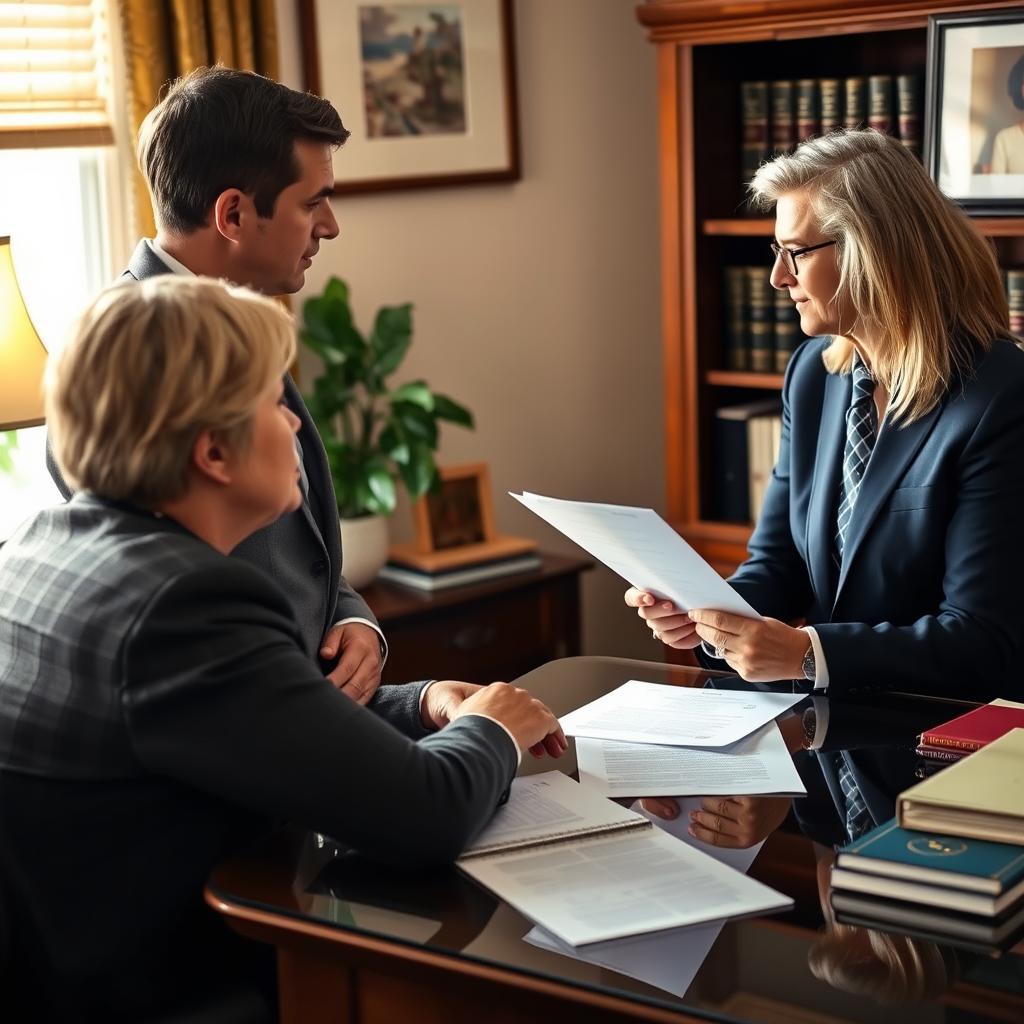
Supervised Visitation Lawyer Albemarle County, VA
You open a letter from the Albemarle County Juvenile and Domestic Relations District Court. The other parent has asked the court to order that your time with your child be supervised. You may feel blindsided, angry, or frightened about what this could mean for your relationship with your daughter or son. At Law Offices Of SRIS, P.C., Mr. Sris and his Of Counsel work with parents throughout Albemarle County — including Charlottesville, Crozet, Earlysville, and the surrounding communities — to respond to supervised visitation requests, protect parental rights, and advocate for arrangements that serve the child’s best interests. Reach our Shenandoah location at (888) 437‑7747 to schedule a consultation.
Responding to a Supervised Visitation Request in Albemarle County
Supervised visitation is not a punishment; it is a protection the court may put in place when it has concerns about a child’s safety or well‑being during parental contact. In Albemarle County, a request for supervised visitation can arise within a divorce, custody modification, or protective‑order proceeding. The court applies the trusted‑interest factors listed in Va. Code Ann. § 20-124.3. And may consider allegations of domestic violence, substance abuse, mental‑health instability, or parental alienation. The parent requesting supervision must present evidence supporting those concerns.
When a parent contests supervised visitation, the Albemarle County Juvenile and Domestic Relations District Court will typically schedule an evidentiary hearing. At that hearing, both sides may testify and present witnesses, documents, and other proof. Because the standard is “best interests of the child,” the court has broad discretion. An experienced family‑law practitioner can help develop a plan that addresses the court’s concerns while seeking to move toward normal, unsupervised parenting time as quickly as the facts allow.
How Mr. Sris and His Of Counsel Handle Supervised Visitation Matters
Mr. Sris, Owner and Founder of Law Offices Of SRIS, P.C., together with his Of Counsel, concentrates on positioning the parent to respond constructively. That often begins with gathering documentation that contradicts or contextualizes the allegations — mental‑health records, letters from counselors, character affidavits from teachers or coaches, and evidence of consistent, caring involvement in the child’s life. In Albemarle County cases, the team appears regularly before the Albemarle County Juvenile and Domestic Relations District Court and, when the visitation issue is tied to a divorce, before the Albemarle County Circuit Court.
The goal is not merely to oppose supervision but to propose a plan the court can accept. That might include a professionally supervised visitation arrangement through a licensed agency, therapeutic visitation with a counselor present, or a phased plan that begins with supervision and includes benchmarks for moving to unsupervised time. Mr. Sris and his Of Counsel bring over 120 years of combined legal experience and have achieved 4,739+ documented firm-wide results. Results may vary.
What Supervised Visitation Looks Like in Albemarle County
When the court orders supervised visitation, it will specify who supervises, where visits occur, and for how long. In Albemarle County, supervisors may be a professional third‑party agency, a mutually agreed‑upon family member, or a clinical provider if the visits are therapeutic in nature. The court retains the power to modify the arrangement if circumstances improve or if the supervised parent meets the conditions the court has set — for example, completing a substance‑abuse program or a parenting class.
Supervised visitation can affect not only the parent‑child relationship but also custody and child‑support determinations. Because Albemarle County courts assess the totality of the family situation, a supervised‑visitation order can influence a final custody ruling. That is why presenting a thorough, documented response at the earliest stage is critical. Mr. Sris and his Of Counsel prepare clients for every step, from the initial hearing through any periodic review hearings the court may schedule.
Frequently Asked Questions
How does supervised visitation work in Albemarle County, Virginia?
A judge orders supervised visitation when unrestricted contact could put the child at risk. In Albemarle County, supervision may be provided by a professional agency, a family member, or a mental‑health clinician, depending on the court’s concerns. The order will state when and where visits occur and what conduct is expected. Both the Albemarle County Juvenile and Domestic Relations District Court and the Circuit Court can issue supervised‑visitation orders as part of custody and divorce cases.
Can a supervised visitation order be modified or lifted?
Yes, supervised visitation can be modified if the supervised parent shows a material change in circumstances. To seek a modification, the parent typically files a motion with the court that issued the original order and presents evidence that the concerns that prompted supervision have been resolved. Mr. Sris and his Of Counsel assist clients in gathering updated treatment records, program‑completion certificates, and testimony to support a move to unsupervised parenting time.
What factors does the court consider when deciding supervised visitation?
The court considers the trusted‑interest factors set out in Va. Code Ann. § 20-124.3. Those include the child’s age and health, the parent’s mental and physical condition, any history of family abuse, the parent’s willingness to support the child’s relationship with the other parent, and the child’s reasonable preference. If the court finds that unsupervised contact would endanger the child’s safety or emotional welfare, it may impose supervision.
Do I need a lawyer if supervised visitation is requested?
You are not required to hire a lawyer, but supervised visitation hearings involve evidence rules and strategic choices that can have lasting effects on your custody rights. An experienced family‑law lawyer can help cross‑examine witnesses, introduce favorable evidence, and propose a phased plan that the court may accept in lieu of a blanket, indefinite supervision order. In Albemarle County courts, the parent who is unrepresented faces the same procedural requirements as the other side.
Can I bring evidence to show that supervision is unnecessary?
Yes, and presenting strong, organized evidence is often the most effective way to oppose a supervision request. Useful evidence may include character references, school or medical records showing your involvement, completion certificates for parenting or counseling programs, and contemporaneous notes or communications demonstrating your commitment to the child. Mr. Sris and his Of Counsel help clients assemble and present this material in a form the Albemarle County courts will consider.
What if the other parent makes false allegations to get supervised visitation?
The court evaluates the credibility of each allegation and will not automatically order supervision based on an accusation alone. However, false allegations can still cause a temporary disruption. An attorney can help you document the falsity, request an early hearing, and seek remedies if the court finds that the other parent acted in bad faith. In Albemarle County, judges are familiar with contested custody dynamics and examine motives carefully.
How long does a supervised visitation order last?
There is no fixed duration; the order remains in place until the court modifies or terminates it. The length depends on the reasons for supervision and the parent’s progress in addressing those issues. Some orders are short‑term, lasting only until a parent completes a program or evaluation. Others may last longer if the concerns are serious. Regular review hearings can be requested to track progress.
Is supervised visitation the same as losing custody?
No, supervised visitation is a restriction on how parenting time is exercised, not a termination of parental rights or physical custody. A parent with supervised visitation still retains legal custody rights and the opportunity to rebuild a full parental relationship. In Virginia, the court views supervised visitation as a temporary measure aimed at protecting the child while the parent works to address whatever issue triggered the order.
Does the firm handle supervised visitation cases in other Virginia localities?
Yes, Mr. Sris and his Of Counsel represent parents in supervised visitation matters across Virginia. In addition to Albemarle County, the firm appears routinely in courts throughout Northern Virginia, the Shenandoah Valley, Central Virginia, and beyond. Reach our firm at (888) 437‑7747 to discuss your specific location.
What should I bring to my first consultation about supervised visitation?
Bring any court papers you have received, any existing custody or visitation orders, and any correspondence from the other parent or their attorney. Also bring documents that show your involvement in your child’s life — school reports, medical records, photos, and a list of witnesses who can speak positively about your parenting. The more information Mr. Sris and his Of Counsel have at the outset, the better they can advise you about likely outcomes in Albemarle County.
For a full statutory analysis of Virginia visitation law, see our comprehensive guide at srislawyer.com/family-law-lawyer-virginia.
Law Offices Of SRIS, P.C. — Shenandoah Location
505 N Main St, Suite 103, Woodstock, VA 22664
By appointment only. Call (888) 437‑7747 to schedule.
Attorney advertising. Prior results do not guarantee a similar outcome.
Results may vary.
Case results depend on a variety of factors unique to each case.