
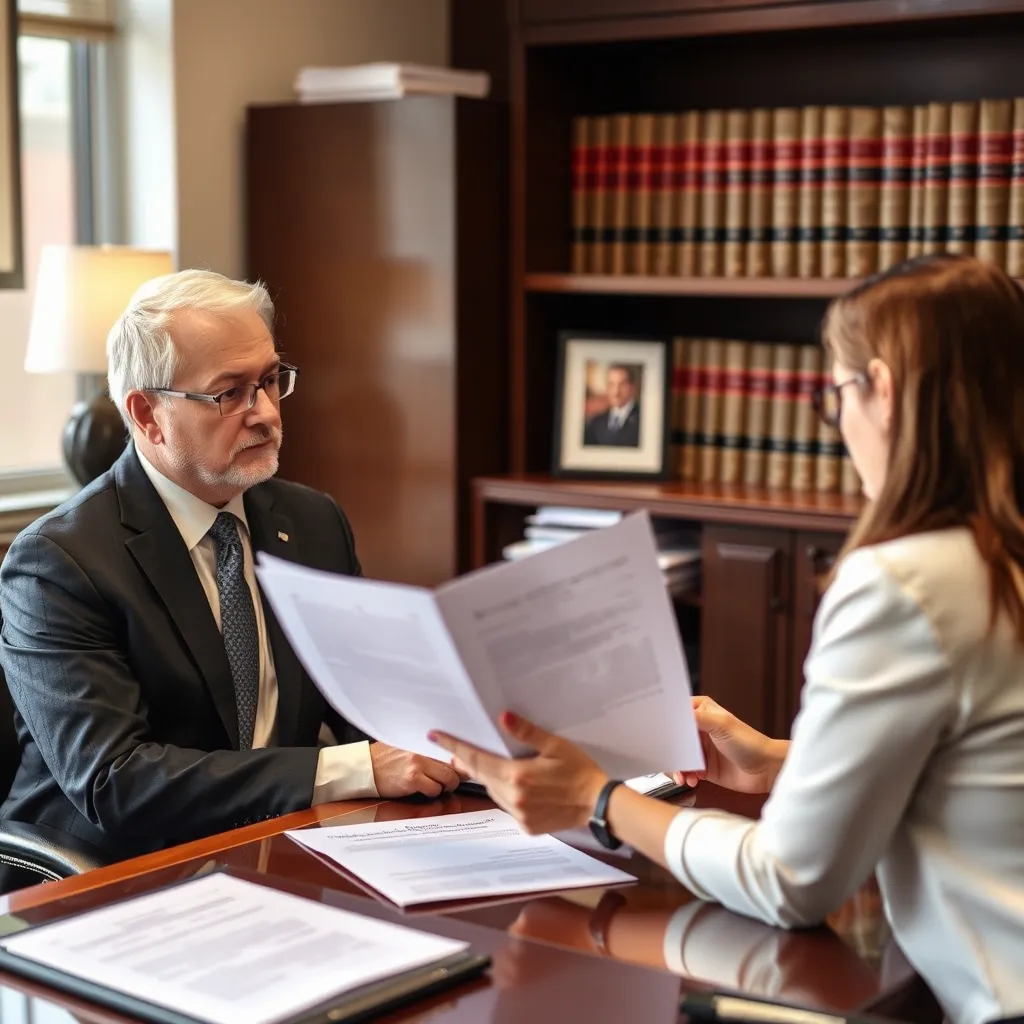
Supervised Visitation Lawyer Falls Church, VA
When a Virginia court orders supervised visitation in Falls Church, the parent-child relationship faces a unique set of legal and practical hurdles. Supervised visitation typically arises when the court determines that a parent’s time with the child must be monitored—often because of concerns about safety, parental fitness, or a history of conflict. The Falls Church Juvenile and Domestic Relations District Court (J&DR Court) has jurisdiction over custody and visitation matters outside of a divorce, while the Falls Church Circuit Court handles these issues within a pending divorce. Law Offices Of SRIS, P.C., founded in 1997, represents parents seeking to establish, challenge, or modify supervised visitation arrangements. Mr. Sris, a former prosecutor, and his Of Counsel team understand the local court procedures and the trusted-interests factors the judges consider under Virginia law. If you need guidance on supervised visitation in Falls Church, reach our location at (888) 437-7747. Law Offices Of SRIS, P.C. — Advocacy Without Borders.
What Supervised Visitation Means in Falls Church
Supervised visitation is a court-ordered parenting-time arrangement in which all contact between a parent and child takes place under the watch of a neutral third party or family member. In Falls Church, the J&DR Court may impose supervised visitation when it finds that unrestricted access would endanger the child’s physical or emotional well‑being. Virginia Code § 20‑124.2 directs the court to determine custody and visitation according to the best interests of the child, considering factors like each parent’s relationship with the child, any history of abuse, and the child’s own needs. A supervised setting can be a stepping stone: it allows the parent to maintain contact while the court assesses whether conditions have improved.
Parents in Falls Church may encounter supervised visitation in several scenarios—after a protective order, during a custody dispute involving allegations of neglect, or when a parent has a history of substance abuse or instability. The court can order supervision at a designated visitation center or by a private supervisor agreed upon by the parties. The Falls Church Circuit Court at 300 Park Avenue, Suite 151W handles all divorce cases where equitable distribution is at issue; if supervised visitation is a component of a divorce, that court will address it alongside property and support questions. Our Fairfax location regularly represents clients at both the J&DR Court and the Circuit Court in Falls Church.
Supervised visitation in Falls Church is heard in the Juvenile and Domestic Relations District Court for standalone matters, and in the Circuit Court when bundled with a divorce or equitable distribution.
Source: Local court practice; Virginia Code § 20-96. Va. Code § 20-96
Reviewed by Mr. Sris, admitted in VA/MD/DC/NJ/NY.
How Mr. Sris and His Of Counsel Handle Supervised Visitation Cases
Mr. Sris and his Of Counsel approach supervised visitation matters with a focus on protecting the parent‑child bond while meeting the court’s safety expectations. They begin by reviewing the order’s underlying basis—whether it stems from a contested custody hearing, a temporary protective order, or a social services investigation. Understanding the specific allegations allows them to chart a path toward less restrictive parenting time. When appropriate, they negotiate with the other parent’s counsel to agree on a supervisor who is acceptable to both sides, which can streamline the court’s approval process and reduce conflict.
If a supervised visitation arrangement needs to be lifted or relaxed, Mr. Sris and his Of Counsel gather evidence demonstrating the parent’s changed circumstances—completion of parenting classes, sustained sobriety, a stable home environment, or favorable reports from the visitation supervisor. They present this evidence at a subsequent hearing, arguing that the best interests of the child now favor more normal contact. In contested cases, they examine procedural compliance and challenge any evidence that does not meet the statutory standard. Every approach is shaped by the particular judge’s expectations in the Falls Church courts and the dynamics of the family.
About Mr. Sris and His Of Counsel Team
Mr. Sris, Owner and Founder of Law Offices Of SRIS, P.C., has practiced family law since the firm opened in 1997. His background as a former prosecutor gives him insight into how allegations of domestic discord or safety concerns are evaluated in court—an advantage when fighting to protect a parent’s visitation rights. Mr. Sris testified before the Virginia House Courts of Justice Committee in support of 2019 HB 635 (chief patron Del. David Bulova). He is admitted in Virginia, Maryland, the District of Columbia, New Jersey, and New York.
Mr. Sris works alongside a team of Of Counsel attorneys—non‑employee practitioners engaged through Excella—who bring extensive experience across multiple practice areas. Together, Mr. Sris and his Of Counsel bring over 120 years of combined legal experience, supported by 4,739+ documented firm-wide results. Results may vary. The group’s collective familiarity with the Falls Church J&DR and Circuit Courts means supervised visitation cases are handled with attention to every judge‑specific procedural nuance.
Frequently Asked Questions
What is supervised visitation in Virginia family law?
Supervised visitation is a court order that requires a neutral third party to monitor all contact between a parent and child. Virginia judges impose it when unrestricted parenting time could hurt the child’s safety or emotional health. The monitor can be a family member, a professional supervisor, or a visitation center. Supervised visitation is not permanent; parents can request a review hearing to move toward unsupervised time once the concerns are resolved.
When does a Falls Church court order supervised visitation?
A Falls Church court orders supervised visitation when evidence suggests a risk of harm to the child. Common triggers include allegations of abuse, neglect, substance abuse, or a history of domestic violence. The J&DR Court may also use it during a pending custody case to ensure the child’s well‑being while the court gathers more information. Parents can petition to modify the arrangement as their situation improves.
How can I get supervised visitation lifted or modified?
You can ask the court to remove or relax supervised visitation by showing that the original safety concerns no longer apply. This often means presenting proof of completed counseling, clean drug tests, stable housing, and favorable reports from the visitation monitor. Mr. Sris and his Of Counsel compile this evidence and file a motion with the Falls Church J&DR or Circuit Court. A judge then decides whether unsupervised time serves the child’s best interests.
Do I need a lawyer for a supervised visitation case in Falls Church?
You are not legally required to hire a lawyer, but an experienced attorney helps protect your parental rights. Supervised visitation cases involve complicated court rules, strict evidence standards, and detailed statutory factors under Va. Code § 20-124.2. Without counsel, parents risk missing deadlines or failing to present the right kind of evidence. Mr. Sris and his Of Counsel are familiar with the Falls Church courts and can offer guidance on building a strong case.
Can supervised visitation affect my divorce or custody case?
Yes, supervised visitation often influences the broader custody and visitation plan that the court will finalize in your case. If the supervised arrangement shows a pattern of safe, positive interactions, that can support a later grant of unsupervised time. On the other hand, repeated violations of the supervision order can harm a parent’s chances of gaining custody or expanded visitation. The Falls Church courts weigh the supervised visitation record carefully when making final determinations.
Related resources: Fairfax County Family Law Lawyer · Prince William County Family Law Lawyer · Manassas Family Law Lawyer
Primary sources: Virginia Code Title 20 (Domestic Relations) · Virginia’s Court System.
Attorney advertising. Prior results do not guarantee a similar outcome. Results may vary.
Case results depend on a variety of factors unique to each case.