
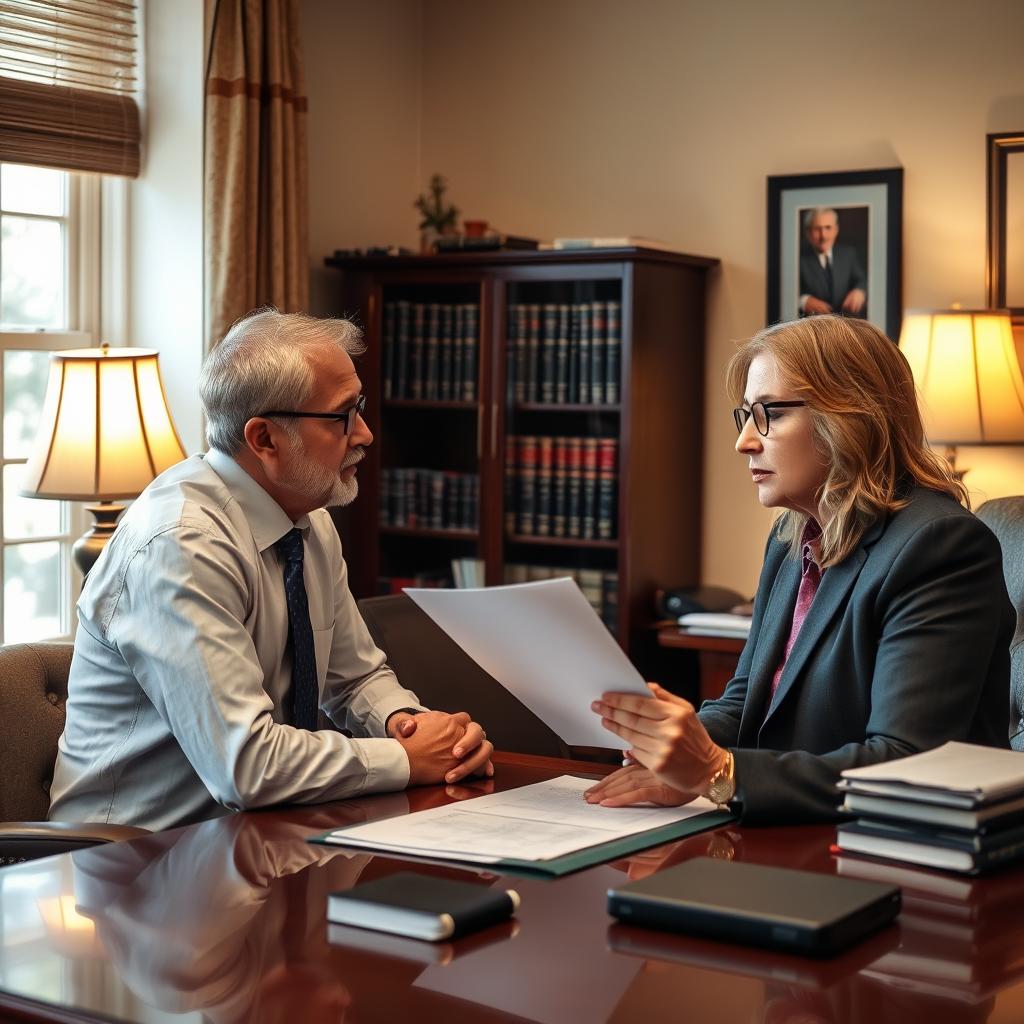
Visitation Lawyer Rappahannock County, VA
When a parent’s time with a child becomes the subject of a court dispute in Rappahannock County, the outcome affects not just a schedule but the fabric of the parent‑child relationship. Virginia law uses the term “visitation” to describe the access a non‑custodial parent has to the child, and courts in Rappahannock County resolve visitation questions under the trusted‑interests standard of Va. Code § 20‑124.3. Whether you need to establish an initial visitation plan, modify an existing order, or enforce your right to consistent parenting time, the procedural path runs through the Rappahannock County Juvenile and Domestic Relations District Court or, when visitation is part of a divorce, the Rappahannock County Circuit Court. Having an experienced family law attorney who understands the local courts can help you present the facts that matter most to the judge. Law Offices Of SRIS, P.C. Concentrates its family law practice on matters just like this. Reach our Fairfax Location at (703) 636‑5417 or toll‑free at (888) 437‑7747 to request a consultation. Law Offices Of SRIS, P.C. — Advocacy Without Borders.
What Visitation Means in Rappahannock County
Visitation in Rappahannock County is governed by the same statutory framework that applies throughout Virginia — the Commonwealth’s child‑custody and visitation statutes are found in Title 20 of the Virginia Code — but local practice, the specific judges assigned to the Twentieth Judicial District, and the rural character of the county all shape how a visitation case unfolds. Rappahannock County is a small, close‑knit community; its courts sit in Washington, Virginia, at 250 Gay Street. The Rappahannock County Juvenile and Domestic Relations District Court handles standalone visitation petitions, while the Rappahannock County Circuit Court decides visitation when it is part of a divorce or when a party appeals a district‑court ruling. Both courts apply the ten statutory best‑interests factors listed in Va. Code § 20‑124.3, including the child’s relationship with each parent, the willingness of each parent to support the child’s contact with the other, and any history of family abuse.
Because Rappahannock County shares judges with Fauquier and Loudoun counties under the Twentieth Judicial District, the bench’s expectations for visitation agreements and courtroom presentation may reflect regional norms. The county’s small population means the court can give close attention to individual family circumstances, but it also means that parties without counsel may find it harder to navigate procedural requirements. A visitation order from the Rappahannock County J&DR Court can address supervised visitation, transportation responsibilities, holiday and summer schedules, and third‑party contact. If circumstances change — a parent relocates, a new safety concern arises, or a child’s needs evolve — a party may petition for modification. Enforcement of an existing visitation order can also be sought through the same court when one parent unreasonably denies the other court‑ordered parenting time.
How Mr. Sris and His Of Counsel Handle Visitation Cases
Mr. Sris and his Of Counsel approach every visitation matter with the understanding that a parent’s access to their child is a fundamental right. The first step is a careful assessment of the existing court orders, the underlying custody determination, and the specific dispute that has brought the client to the firm. In many cases, the issue is not that the law is unclear but that one parent is failing to follow a clear order; in those situations, the team focuses on building a record that demonstrates the violation to the court. In other cases, the client needs an initial visitation schedule crafted, and the attorneys work with the client to propose a plan that serves the child’s best interests and fits the family’s practical realities. Mr. Sris and his Of Counsel have handled family law matters in Virginia for years, and they know how to present visitation issues to the Rappahannock County courts in a way that is both legally sound and persuasive.
When a case requires courtroom advocacy, the firm’s experience with litigation becomes an asset. Rappahannock County hearings are held during the court’s regular business hours, and the timeline for a visitation hearing depends on the court’s calendar. Mr. Sris and his Of Counsel prepare clients thoroughly for what to expect, helping them understand the kind of testimony and evidence that judges typically find most useful. If mediation is appropriate — Virginia law encourages but does not mandate it in visitation disputes — the team can represent the client’s interests during those discussions. At every stage, the goal is to secure a visitation arrangement that protects the parent‑child relationship, while keeping the litigation as efficient and focused as possible.
About Mr. Sris and His Of Counsel Team
Mr. Sris, Owner and Founder of Law Offices Of SRIS, P.C., has practiced law since 1997 and is admitted in Virginia, Maryland, the District of Columbia, New Jersey, and New York. A former prosecutor, he brings a courtroom‑tested perspective to family law motions and hearings. Mr. Sris testified before the Virginia House Courts of Justice Committee in support of 2019 HB 635 (chief patron Del. David Bulova). His Of Counsel team brings over 120 years of combined legal experience — including attorneys who are former prosecutors, a former Virginia State Trooper, and a veteran litigator with extensive child‑welfare experience — to every family law matter. Results may vary. Together, Mr. Sris and his Of Counsel have documented 4,739+ case results across all practice areas since 1997.
In Rappahannock County, the firm’s Fairfax Location — 4008 Williamsburg Court, Fairfax, VA 22032 — represents clients in visitation cases before the Juvenile and Domestic Relations District Court and the Circuit Court. Consultations are available by appointment; call (703) 636‑5417 or toll‑free (888) 437‑7747 to schedule. Because the firm’s approach emphasizes collaboration, clients benefit from the collective insight of a multi‑jurisdiction team that understands both the statutory framework and the practical realities of presenting a case in Virginia’s rural courts.
Frequently Asked Questions
What is the difference between legal custody and visitation in Virginia?
Legal custody refers to decision‑making authority, while visitation concerns the non‑custodial parent’s physical time with the child. In Virginia, the parent with primary physical custody is the one with whom the child lives most of the time; the other parent typically receives a visitation schedule. The Rappahannock County Juvenile and Domestic Relations Court can order visitation that may range from unsupervised overnight weekends to supervised short‑term visits, depending on the child’s best interests. Custody and visitation orders are always modifiable if a material change in circumstances occurs after the entry of the last order.
How does the court decide whether to order supervised visitation?
Supervised visitation may be ordered when the court finds that unsupervised contact would pose a risk to the child’s physical or emotional safety. Under Va. Code § 20‑124.3, the court weighs factors such as any history of abuse, substance misuse, or a parent’s mental‑health instability. In Rappahannock County, the judge may rely on reports from a Guardian ad litem or input from social services. Supervised visits often take place at a neutral location with a court‑approved supervisor present; the conditions are spelled out in the order, and parties can petition to lift supervision when the risk has been addressed.
Can a grandparent or other relative seek visitation rights in Rappahannock County?
Yes, under limited circumstances set by Virginia statute, a grandparent or other person with a legitimate interest may petition for visitation. Virginia courts begin with the presumption that a fit parent acts in the child’s best interests, so a non‑parent must overcome that presumption. The petitioner typically must show that denying visitation would harm the child and that the existing parent‑child relationship is significant. Rappahannock County courts hear these petitions in the Juvenile and Domestic Relations District Court, applying the same best‑interests factors used in any custody or visitation case.
What should I do if the other parent refuses to follow the visitation order?
A parent whose visitation rights are being denied can file a motion for a show‑cause summons or a petition for enforcement in the Rappahannock County J&DR Court. The court can order makeup parenting time, modify the visitation schedule to prevent future violations, or, in serious cases, hold the non‑compliant parent in contempt. Documenting each missed visit (dates, times, and communications) strengthens the enforcement request. The procedural rules require proper service and notice, and an experienced attorney can help ensure the motion is filed correctly so the court hears it promptly.
Can a visitation order be changed without going back to court?
Only a new court order can modify the terms of an existing visitation order. Parents can agree to a temporary deviation, but any permanent change — or any disagreement about the existing schedule — must be presented to the court. In Rappahannock County, a parent seeking a modification files a petition demonstrating a material change in circumstances since the last order and showing that the proposed new schedule serves the child’s best interests. If both parents agree to the change, the process is usually simpler, but the agreement must still be approved by a judge.
For guidance on your specific situation, reach Law Offices Of SRIS, P.C. at (888) 437‑7747.
Related Family Law Resources:
Fairfax County Family Law Lawyer
Prince William County Family Law Lawyer
Loudoun County Family Law Lawyer
Falls Church Family Law Lawyer
Manassas Family Law Lawyer
Virginia Family Law Primary Sources:
Virginia Code, Title 20 — Domestic Relations
Rappahannock County Circuit Court
Virginia Judicial System Home
Attorney advertising. Prior results do not guarantee a similar outcome.
Case results depend on a variety of factors unique to each case.
Results may vary.